Baghdad Battery
₹500.00 Original price was: ₹500.00.₹250.00Current price is: ₹250.00.
Discover how ancient people may have created electricity — 2,000 years before Edison!
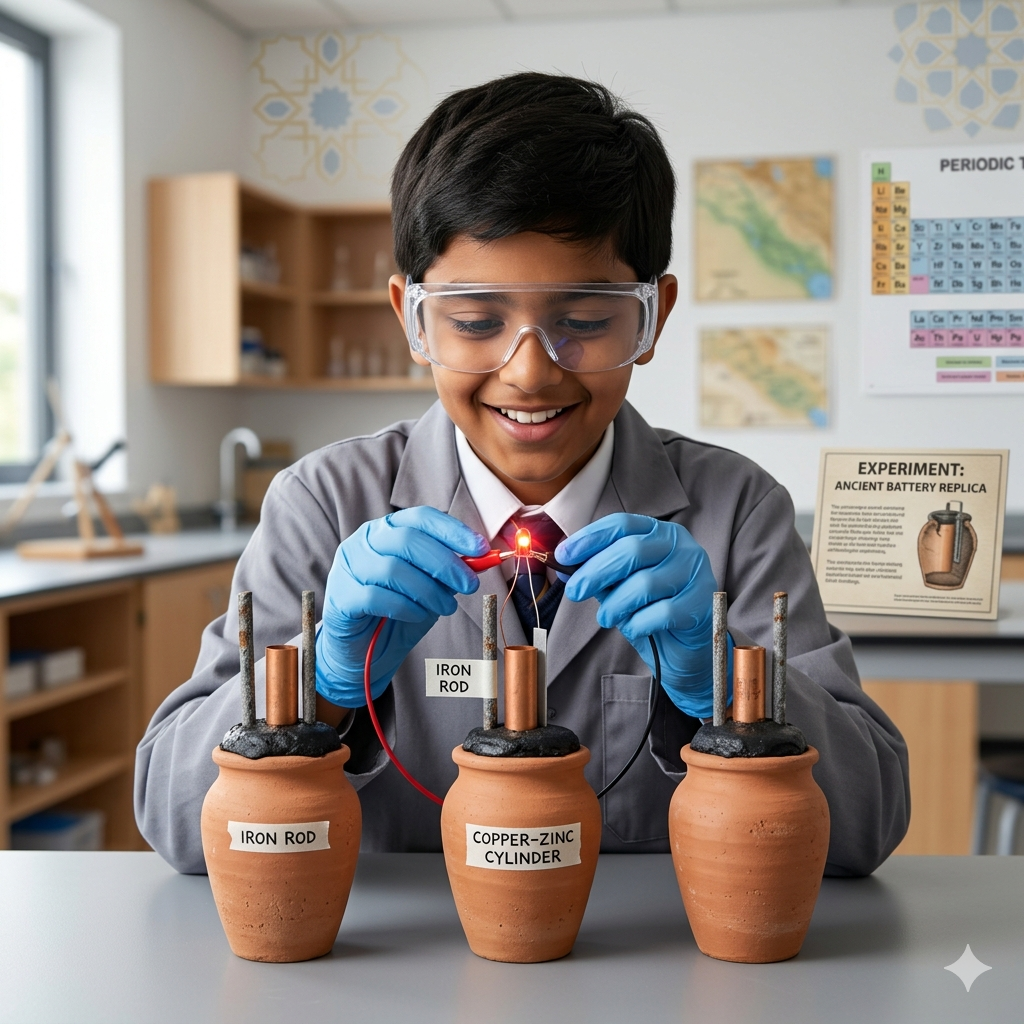
In 1936, a clay pot was discovered near Baghdad containing a copper cylinder and an iron rod. When reconstructed and filled with an acidic liquid, it produced a measurable electric current. Could ancient people have used electricity? Scientists still debate this today.
In this session, your child explores this real-world archaeological mystery and builds their own Baghdad Battery replica using safe, child-friendly materials. They will test it, measure the output, and connect it to real modern concepts of electrochemistry.
Did you know? Some researchers believe the Baghdad Battery could have been used for electroplating gold onto silver jewellery — a process still used in modern jewellery making!
What your child will do:
-
Learn the story of the Baghdad Battery discovery
-
Assemble a working replica using copper, zinc, and citric acid solution
-
Use a basic voltmeter or LED to detect electrical output
-
Explore the chemistry of oxidation and electron flow
-
Discuss and debate whether ancient people understood electricity
What your child will learn:
-
Basic electrochemistry: oxidation, reduction, and electron transfer
-
How a simple battery generates voltage
-
Archaeological and historical thinking: evidence and interpretation
-
Scientific method: hypothesis, test, observation, conclusion
-
Critical thinking and debate skills
Product Details
Key Learning Outcomes
-
Basic electrochemistry and how batteries work
-
Historical and archaeological reasoning
-
Scientific method and evidence-based thinking
-
Critical thinking and open-ended debate
-
Introduction to electrical concepts and voltage
Discover how ancient people may have created electricity — 2,000 years before Edison!
In 1936, a clay pot was discovered near Baghdad containing a copper cylinder and an iron rod. When reconstructed and filled with an acidic liquid, it produced a measurable electric current. Could ancient people have used electricity? Scientists still debate this today.
In this session, your child explores this real-world archaeological mystery and builds their own Baghdad Battery replica using safe, child-friendly materials. They will test it, measure the output, and connect it to real modern concepts of electrochemistry.
Did you know? Some researchers believe the Baghdad Battery could have been used for electroplating gold onto silver jewellery — a process still used in modern jewellery making!
What your child will do:
-
Learn the story of the Baghdad Battery discovery
-
Assemble a working replica using copper, zinc, and citric acid solution
-
Use a basic voltmeter or LED to detect electrical output
-
Explore the chemistry of oxidation and electron flow
-
Discuss and debate whether ancient people understood electricity
What your child will learn:
-
Basic electrochemistry: oxidation, reduction, and electron transfer
-
How a simple battery generates voltage
-
Archaeological and historical thinking: evidence and interpretation
-
Scientific method: hypothesis, test, observation, conclusion
-
Critical thinking and debate skills
Product Details
Key Learning Outcomes
-
Basic electrochemistry and how batteries work
-
Historical and archaeological reasoning
-
Scientific method and evidence-based thinking
-
Critical thinking and open-ended debate
-
Introduction to electrical concepts and voltage