
Enhancing Emotional Intelligence in Children
Children learn many things from books, but some of the most important lessons in life are learned through feelings.
A child who can recognise frustration, name excitement, notice another person’s sadness, or calm themselves after disappointment is developing something more valuable than test scores. They are developing emotional intelligence — the ability to understand emotions, manage reactions, and connect with other people in healthy ways.
This matters because life is not lived in isolation. Children spend their days in families, classrooms, playgrounds, and group activities where they must listen, share, wait, adapt, and relate. Emotional intelligence helps them do all of that with more confidence and less conflict.
What Emotional Intelligence Looks Like
Emotional intelligence is not about being calm all the time or never feeling upset. It is about being aware of feelings and responding in a thoughtful way. A child with growing EQ can usually identify what they are feeling, notice what others might be feeling, and choose a better response instead of reacting automatically.
That may look small from the outside, but it is a major life skill. It helps children resolve disagreements, recover from setbacks, and build strong friendships.
Why Group Learning Helps
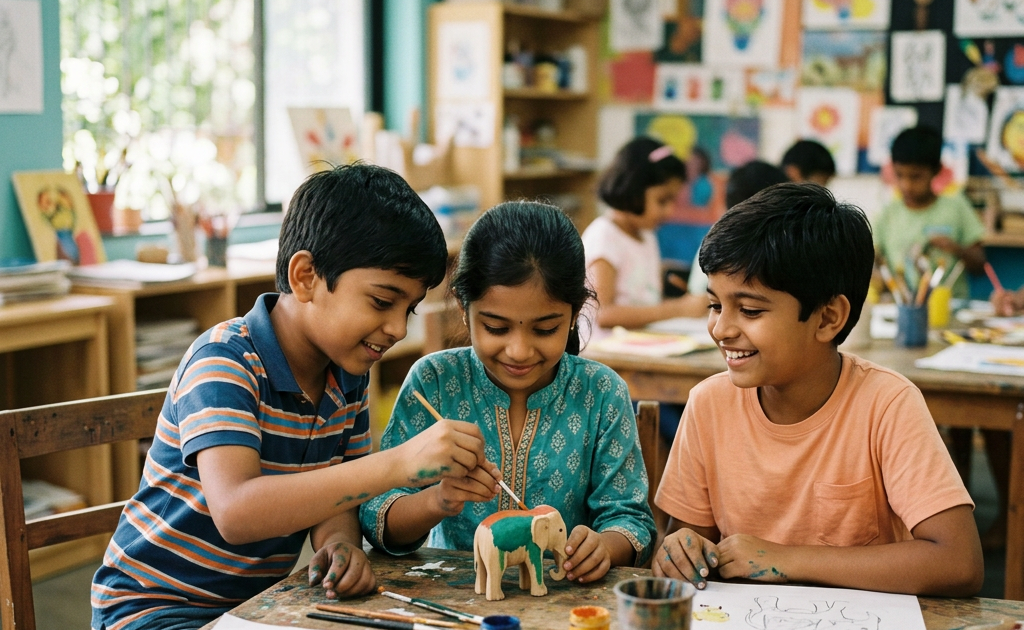
Group activities are one of the best ways to develop emotional intelligence because they create real social moments, not just discussions about feelings. When children build something together, solve a puzzle as a team, or work through a challenge with peers, they practice patience, listening, turn-taking, and compromise.
These activities also expose children to different perspectives. One child may want to rush ahead while another wants to think slowly. One may feel proud while another feels stuck. Learning to navigate those differences respectfully is a core part of emotional growth.
How Hands-On Activities Build EQ
Hands-on sessions make emotional learning natural. When a child is working on a shared project, emotions appear in real time: excitement, frustration, surprise, disappointment, joy. Instead of talking about feelings in the abstract, children learn how emotions actually show up in everyday situations.
That is especially powerful because children often learn best through experience. If a child sees that asking for help works better than giving up, or that encouraging a teammate improves the whole group, they start to repeat those behaviours outside the workshop too.
What Parents Can Do
Parents play a huge role in emotional intelligence. The best support often comes from small, repeated habits rather than big lectures.
- Name emotions out loud. Say, “You look disappointed,” or “That made you excited,” so children learn emotional vocabulary.
- Model calm problem-solving. Children copy how adults respond to stress.
- Ask reflective questions. “What happened?” “How did that feel?” “What could you try next?”
- Praise empathy and kindness, not just achievement.
- Give children chances to work with others, because social practice builds social skill.
Why It Matters Long Term
Children with stronger emotional intelligence often do better in school, handle stress more effectively, and build healthier relationships. They are better prepared for teamwork, leadership, and the everyday ups and downs of growing up.
At Active Growth Hub, we believe emotional intelligence grows naturally when children are given meaningful group experiences, safe spaces to express themselves, and opportunities to learn from one another. Skills like empathy, patience, and communication are not extra benefits — they are part of becoming ready for life